
Heel pain when walking rarely starts “with a bang.”
More often, it begins with the very first step in the morning: you get out of bed, shift your weight onto your foot — and a sharp, stabbing pain shoots through the heel. After a few minutes of walking, it seems to ease a bit. But a couple of days later, the same thing happens again. And before long, a person starts moving carefully around the house, choosing shoes more cautiously, cutting walks short, and “protecting the leg,” even if they don’t want to admit there’s a real problem.
If you live in Israel, this becomes especially noticeable. There’s a lot of walking, stairs, a fast-paced routine, and often work that requires being on your feet. Heel pain immediately affects everyday life: walking to the store, driving the kids, taking an evening walk, climbing stairs in Haifa or the Krayot. There’s nothing “dramatic” about it — it’s simply uncomfortable. And then it starts to genuinely interfere with life.
At the David Sendler Pain Treatment Clinic, the service “Help for Heel Pain When Walking (ESWT)” is built around a straightforward approach: first, we carefully assess the pain pattern, and then we apply extracorporeal shock wave therapy (ESWT) as a method to support tissue recovery and reduce pain — without surgery and without injections.
Pain: how it looks in real life
Heel pain tends to follow several very typical scenarios, and patients describe them using almost the same words.
The first scenario is morning pain.
After sleep or prolonged sitting, the first steps are the most unpleasant. The heel “cuts,” “stabs,” or “burns.” After 2–10 minutes, it becomes more tolerable, but the body remembers the pain and subconsciously starts limiting load.
The second scenario is load-related pain.
During the day, things may feel acceptable — but after longer walking, standing, running errands, visiting a market or shopping center, the heel starts aching in the evening, as if there’s a “stone” inside. Sometimes the pain builds gradually: it starts as mild discomfort and, within a week, makes it hard to plan any activity.
The third scenario is mixed.
Pain in the morning, tolerable during the day, unpleasant again in the evening. This is especially exhausting because there’s no clear moment when it “lets go,” and life slowly shifts into a constant limitation mode.
One important detail: heel pain changes the way a person walks. Weight shifts, the foot lands differently, load moves to the outer edge of the foot or the other leg. Over time, the knee, hip, and lower back may become involved. Not always immediately — but the connection is very common.
Why heel pain develops
The most common cause is overload of the foot tissues, especially at the attachment of the plantar fascia. In everyday language, this is often called a “heel spur,” although pain can exist even without obvious bone changes.
What is usually behind heel pain:
- chronic micro-trauma of the plantar fascia (plantar fasciitis)
- overload due to prolonged standing, excess body weight, or a sudden increase in walking or sports
- unsuitable footwear or lack of proper foot support
- age-related tissue changes and reduced elasticity
- sometimes a combination with Achilles tendon or calf muscle issues
A common mistake is trying to “push through” the pain or relying only on painkillers. Medication may reduce symptoms, but the mechanical overload remains.
The solution: how ESWT is used for heel pain
Extracorporeal Shock Wave Therapy (ESWT) is a method in which acoustic waves of controlled intensity are applied to the problem area. It is not surgery and not injections. The goal is a targeted stimulus for the tissues: improving microcirculation, supporting recovery processes, reducing chronic inflammation, and decreasing pain sensitivity in the overloaded area.
In simple terms, we don’t “mask” the problem — we help the tissues exit a constant irritation mode and restart recovery.
ESWT for heel pain is usually considered when:
- pain persists for weeks or months
- walking and daily activity are limited
- basic measures (rest, footwear changes, insoles) provide weak or short-term relief
- there is a desire to avoid injections or surgery if possible
We do not promise “one session and forever.” Instead, we build a clear plan and monitor progress. This approach is more honest — and usually more effective.
How the service works in the clinic
The process doesn’t start with the device. It starts with clarification: where exactly it hurts, when it’s worse, what has already been tried, what increases the pain, what shoes are worn, and what the daily load looks like. This allows us to work precisely, not blindly.
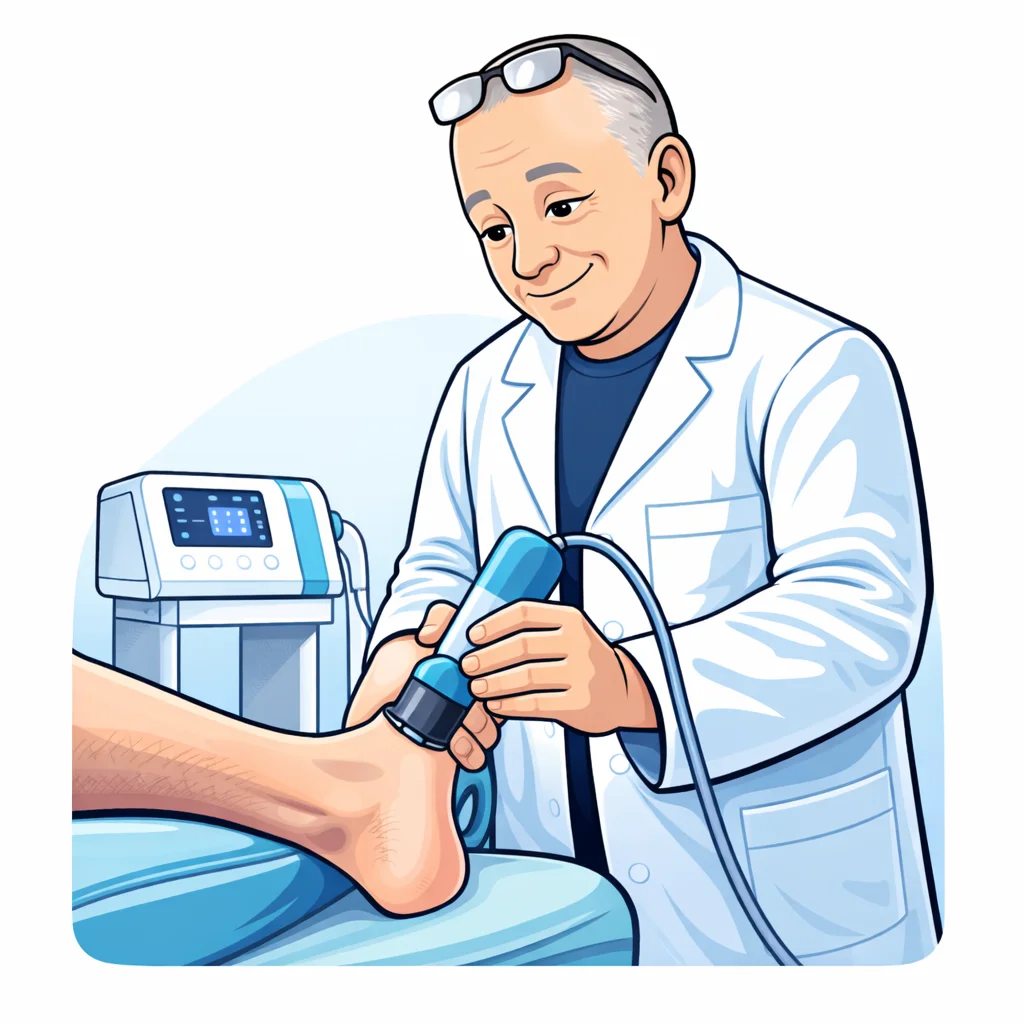
Then comes the ESWT procedure itself:
- you are positioned comfortably
- a special gel is applied to the treatment area
- the specialist works with the applicator over the painful zone
- parameters are adjusted to your sensitivity and the goal of the session
Sensations can be intense but are usually tolerable. Patients often say: “Unpleasant, but manageable.” That’s normal — the procedure shouldn’t be torture, but it’s not a light massage either.
Most people return to normal activities the same day. Sometimes the area remains sensitive for 24–48 hours — this is expected and discussed in advance.
What usually changes: realistic expectations
A typical positive progression includes:
- reduced sharpness of morning pain
- longer walking distance without discomfort
- less pain after load
- reduced need to constantly “protect” the foot
Sometimes the first improvement isn’t dramatic relief, but better pain control. That alone is a good sign — it means tissues are no longer reacting as if under constant threat.
What enhances results alongside ESWT
From an LPO perspective, the key is simple: treatment works better when its conditions aren’t undermined.
We usually recommend (individually, without extremes):
- temporarily reducing high-impact loads (long runs, jumping)
- reviewing footwear: cushioning and support matter more than appearance
- following insole recommendations if indicated
- returning to activity gradually, not “20,000 steps all at once”
Sometimes just two small adjustments significantly speed up improvement.
Who this service is for — and who may need a different approach
Most suitable when heel pain is related to chronic overload of the plantar fascia and surrounding tissues, without signs of acute injury requiring another strategy.
May not be suitable (or requires additional evaluation) if there are contraindications or if further diagnostics are needed. This is discussed openly during consultation — without pressure and without a “one-size-fits-all” approach.
Geography: where we see patients in Israel
The service “Help for Heel Pain When Walking (ESWT)” is available at the David Sendler Pain Treatment Clinic.
We work across the following locations: Haifa, the Krayot, Akko, Nahariya, Afula, Yokneam, Petah Tikva, Netanya, Hadera, Kfar Saba, Israel.
Home demonstration visits — by prior arrangement.
This is helpful for patients who find travel difficult or want to understand the procedure format at home.
Frequently asked questions (AEO / voice search)
How long does an ESWT session for heel pain take?
Sessions are relatively short; duration depends on the area and treatment plan and is discussed on site.
Is ESWT painful?
Sensations can be intense, but settings are adjusted to tolerance. The goal is effective treatment without unnecessary discomfort.
When can improvement be expected?
For many people, changes are gradual: first the morning pain becomes less sharp, then walking becomes easier.
Do I need to stay home after the procedure?
Usually no. Sometimes we recommend reducing impact load for 1–2 days.
Is ESWT an alternative to surgery?
In some cases, ESWT helps avoid more aggressive interventions, but decisions are always individual.
Is ESWT suitable if the pain has been present for a long time?
Chronic symptoms are often exactly when this method is considered, provided there are no contraindications.
A simple guideline: when it’s time to book
If at least two of the following apply, it’s worth not delaying:
- heel pain lasts longer than 2–3 weeks
- first steps in the morning are painful
- pain worsens after walking or standing
- footwear changes and painkillers haven’t solved the issue
A straightforward ending
Heel pain when walking is stubborn precisely because walking can’t be avoided. You can’t “switch off” your foot for a week. That’s why approaches that fit real life tend to work best: a clear plan, a focused procedure, progress monitoring, and realistic expectations.
If you want to understand why your heel hurts and whether ESWT may help in your specific case, the David Sendler Pain Treatment Clinic sees patients across Israel — from Haifa and the Krayot to Netanya, Hadera, and Kfar Saba.