
Heel pain is one of the most common reasons people seek care at pain clinics in Israel. Patients describe it in very similar terms: sharp pain when stepping on the heel, especially in the morning or after rest; the first steps are difficult; by evening it feels easier, but the same pattern repeats the next day. In medical practice, these complaints are most often associated with overload of the plantar fascia and the so-called heel spur, although the bony growth itself is far from always being the main source of pain.
This problem is particularly characteristic for Israel. An active lifestyle, extensive walking, stairs, hilly terrain, hot climate, long periods of standing, as well as excess body weight and age-related changes create constant stress on the foot. As a result, the tissues do not have enough time to recover, and the pain becomes chronic.
Why heel pain appears specifically in the morning
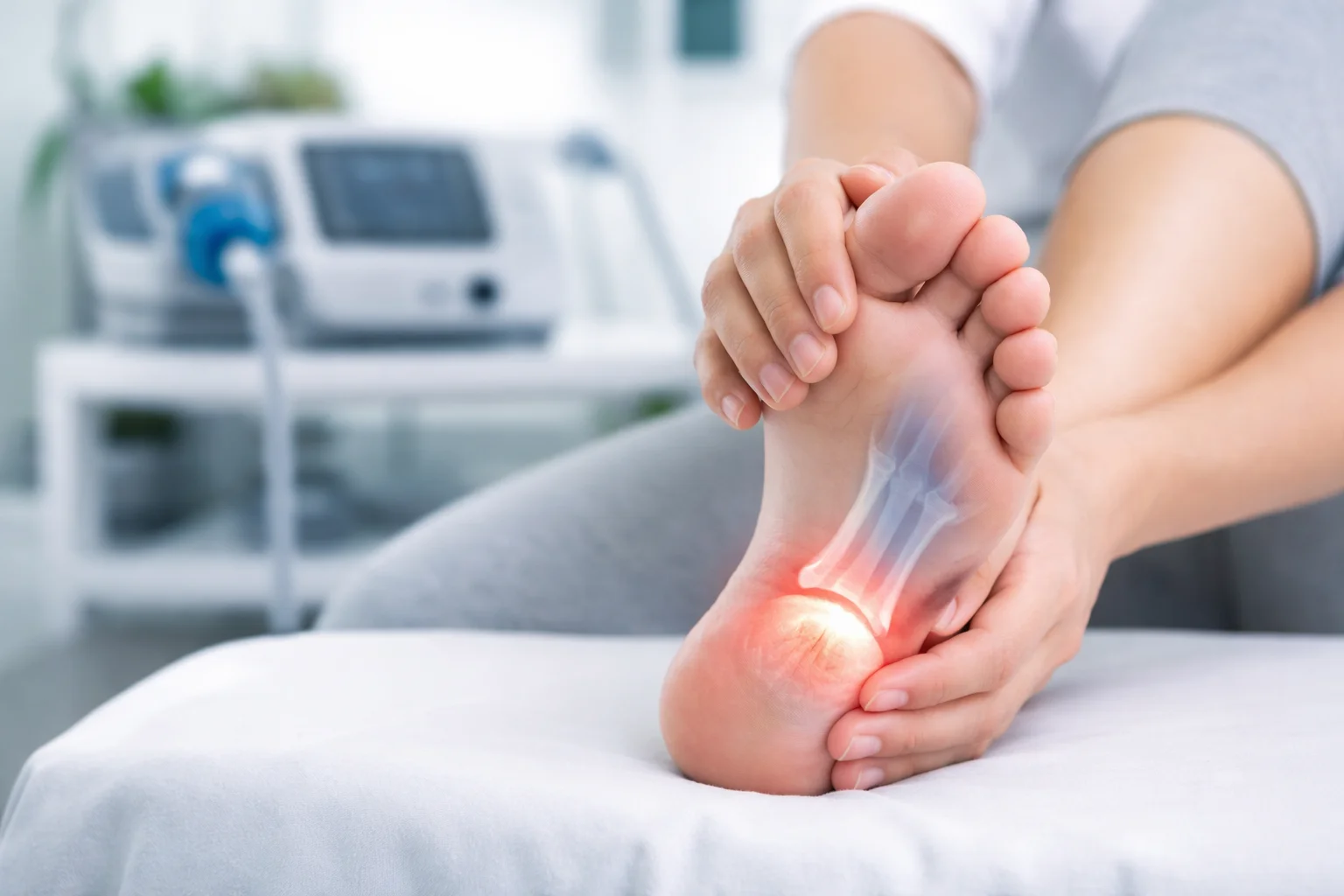
One of the key features of heel pain is the worsening of symptoms after sleep or prolonged sitting. This is not a coincidence. During rest, the plantar fascia shortens, blood supply decreases, and micro-damage does not receive adequate recovery. When a person takes the first step, the tissue is suddenly stretched, causing sharp pain.
As movement continues, circulation improves, the fascia “warms up,” and the pain temporarily decreases. This is exactly why many people postpone seeing a specialist, believing that the problem will “walk itself off.” In practice, this leads to the opposite effect: the overload becomes fixed, and the pain turns persistent.
Heel spur — cause or consequence
X-ray examinations reveal a heel spur in many patients. This is a bony outgrowth in the area where the fascia attaches to the heel bone. However, clinical experience shows that the size of the spur does not always correlate with the intensity of pain. Some people have a spur without pain, while others experience severe pain without a significant bony formation.
In pain clinics, the heel spur is viewed more as a consequence of chronic overload rather than as an independent disease. The primary source of pain is inflammation and degenerative changes in the soft tissues. That is why attempts to “treat the spur” only with creams or injections often provide only temporary relief.
When standard treatment stops working
Most patients, before coming to a pain clinic, have already tried conservative treatments: anti-inflammatory medications, topical creams, insoles, stretching exercises. In some cases, injections are prescribed, which can indeed reduce pain for a short period.
The problem is that these approaches do not eliminate the underlying cause — the disrupted tissue recovery process. As soon as a person returns to normal daily load, the pain comes back. In Israeli clinical practice, this is one of the most common reasons for repeat visits: “I was treated, it helped for a while.”
The role of a pain clinic in treating heel pain
In a pain clinic, heel pain is not considered in isolation but within the context of the entire biomechanics of movement. Not only the heel itself is evaluated, but also gait, foot position, the condition of the calf muscles, the Achilles tendon, as well as the knee and hip joints.
A typical overload chain is often identified: shortened calf muscles → increased tension on the fascia → chronic inflammation in the heel area. Without correcting this chain, even the most advanced treatment methods will not provide stable results.
Shockwave therapy for heel pain
One of the methods used in pain clinics in Israel for chronic heel pain is shockwave therapy (SWT). This is neither surgery nor hormonal treatment. The method is based on the application of acoustic waves to the affected area.
Shockwave therapy is used when pain persists for months and does not respond to standard treatment. The intervention is aimed at improving blood circulation, reducing chronic inflammation, and activating tissue recovery processes. It is important to emphasize that this is not about “quick pain relief,” but about addressing the underlying cause of pain.
How many sessions are actually needed
One of the most common questions patients ask is how many sessions are required. There is no universal answer. In clinical practice, treatment usually involves a course of several sessions, with intervals that allow tissues to adapt to the load. The effect is evaluated over time, not after the first procedure.
An important point: shockwave therapy is almost always combined with load management recommendations, exercises, and changes in movement habits. Without this, even a properly conducted course may produce unstable results.
Patient geography and the specifics of Israel
In Israel, patients with heel pain seek care at pain clinics from various regions — Haifa, the Krayot area, Netanya, Hadera, Kfar Saba, Petah Tikva, and other cities. Despite differences in lifestyle, the complaints sound the same: “it hurts to walk,” “I’m afraid to step,” “I can’t get up normally in the morning.”
What unites these cases is high daily load and the expectation that the pain will resolve on its own. That is why Israeli clinical practice increasingly emphasizes early consultation and a comprehensive approach to treatment.
When shockwave therapy is not the solution
It is important to clearly define the limits of the method. Shockwave therapy is not used in cases of acute fractures, infectious processes, or complete tissue ruptures. In patients with significant systemic diseases, the choice of treatment method is made individually.
The goal of a pain clinic is not to prescribe a procedure at any cost, but to select a method that truly corresponds to the patient’s clinical condition.
Why heel pain should not be ignored
Chronic heel pain changes gait patterns. A person begins to spare the affected foot, shifting load to the knee, hip, and lower back. Over time, this leads to secondary pain and new problems that were not originally related to the foot.
From the perspective of modern medicine, heel pain is a signal of an imbalance between load and recovery. Ignoring it increases the risk of more complex disorders in the future.
Practical conclusion
Heel pain and heel spur are not a “minor issue,” but one of the most common reasons for reduced quality of life among active people in Israel. Effective treatment requires accurate diagnosis, understanding the mechanism of pain, and a comprehensive approach.
A pain clinic works precisely with this task: identifying the cause, explaining what is happening to the patient, and offering methods aimed at recovery rather than only temporary symptom relief.